What to eat after a workout comes down to two things: protein, and carbs, eaten sometime in the next few hours. Not the next thirty minutes. The "anabolic window" you've heard about is real, it's just a lot wider than the supplement industry needs you to believe, more like four to six hours than a sprint to the blender before your heart rate even comes down.
This closes out the eating-and-training set we've been building all month: what to eat before you train is its own page, and now here's the other end of the session, what actually matters once the workout's done. Below is the honest window, real food lists for lifting and cardio, how much protein a single sitting can actually use, and what to do on the days your stomach wants nothing to do with food.
The short answer: what to eat after a workout
Eat a mix of protein and carbs within a few hours of training, and don't stress about the exact minute. Protein rebuilds the muscle you just broke down, carbs refill the glycogen you burned through, especially after a long or hard cardio session. Somewhere in the 20 to 40 gram range of protein covers most people's post workout meal, and the carb amount matters less precisely than just making sure it's there.
The part that actually moves the needle isn't hitting a narrow window, it's whether you eat enough protein across the whole day. A post workout meal is one input into that total, not a magic multiplier that undoes a day of undereating.
The anabolic window: what studies actually show
The 30 minute anabolic window is a leftover from early 2000s supplement marketing: the idea that muscle protein synthesis spikes for a brief moment after training and then slams shut, so you'd better be chugging a shake before you've even racked the bar. It made for a great reason to buy a shaker bottle. It's just not how the physiology actually works.
Muscle protein synthesis stays elevated for closer to a day or more after a hard lifting session, not a single frantic half hour. Exercise scientists who've reviewed the protein timing literature, most notably Brad Schoenfeld and Alan Aragon, have made the same point for years: total daily protein intake predicts muscle gain far better than the precise timing of any one meal. If you ate a normal meal an hour or two before training, covered in our breakdown of the best pre workout food by time window, those nutrients are still being digested during your workout and well into your recovery. You're not starting from zero the second you finish your last set.
That doesn't mean timing is irrelevant, it means it's a small lever, not the main one. It's the same conclusion we landed on looking at creatine timing: there's a minor edge to eating sooner rather than later, especially if you trained fasted, but it's nowhere near as important as just eating enough, consistently, day after day.
The one case where the window tightens up a bit is training fasted, or going more than a few hours without eating beforehand. If your last meal was early morning and you're lifting at lunch, your body's had longer to run through what you ate, so getting protein and carbs in within an hour or two afterward is a better idea than shrugging it off until dinner. Even then, it's "sooner is a little better," not "immediately or it doesn't count."
What to eat after lifting (concrete list, by appetite)
Lifting burns through less total glycogen than a long cardio session, so the priority after a lifting workout is protein first, with carbs playing a supporting role.
Hungry and ready for a real meal:
- 6-8 oz grilled chicken, steak, or salmon with a cup of rice or potatoes and a vegetable side
- Three whole eggs plus two egg whites, scrambled, with a slice of toast and fruit
- A burrito bowl: 6 oz ground turkey or beef, rice, beans, and salsa
- A protein shake blended with a banana and a tablespoon of peanut butter
Normal appetite, want something quick:
- Greek yogurt (1 cup) with berries and a drizzle of honey
- A turkey and cheese sandwich on whole grain bread
- Cottage cheese (1 cup) with pineapple or a sliced peach
- A protein shake with a piece of fruit
Not very hungry, but know you should eat something:
- A protein shake on its own, sipped over 15-20 minutes
- Chocolate milk (a genuinely solid post workout drink: real protein and carbs in a form that goes down easy)
- A small Greek yogurt cup
- A few slices of deli turkey with crackers
None of these need to be eaten in the locker room. Get to one of them within a couple of hours and you've covered what actually matters.
What to eat after cardio
Cardio, especially anything past 45 minutes to an hour, burns through more stored carbohydrate than a typical lifting session, so the post workout meal leans a little more toward carbs to refill the tank, while still carrying enough protein to support the muscle you're using to run, cycle, or row.
Good options after a hard or long cardio session:
- A bagel with a couple tablespoons of peanut butter and a banana
- A bowl of rice or pasta with grilled chicken and vegetables
- Chocolate milk plus a piece of fruit
- A smoothie with banana, oats, milk, and a scoop of protein powder
- Toast with eggs and orange juice
For an easy or short cardio session (a 20 minute jog, a light bike ride), you don't need to treat it like a glycogen emergency. A normal meal at your normal next mealtime covers it fine. Save the carb-forward refuel for the sessions that actually emptied the tank: long runs, hard intervals, or anything that left you genuinely depleted.
Protein per meal: how much actually helps
There's a ceiling on how much protein a single meal usefully puts to work building or repairing muscle, and it's lower than most people assume. Research on muscle protein synthesis generally points to somewhere in the 20 to 40 gram range per meal as the sweet spot for most people, with bigger, more muscular individuals sitting toward the top of that range and smaller people toward the bottom.
A rough way to think about it: aim for something like 0.25 to 0.4 grams of protein per kilogram of bodyweight in a single sitting. For a 160 lb lifter (about 73 kg), that's roughly 18 to 29 grams. For a 220 lb lifter (about 100 kg), that's closer to 25 to 40 grams. Eating well past that ceiling in one meal isn't harmful, it just doesn't buy you extra muscle repair beyond what your body can use right then. The surplus gets used for energy or stored like any other calories.
This is exactly why your daily total matters more than any single post workout meal. If you're already tracking your macros and hitting your protein target across three or four meals a day, the post workout meal is just one of those meals, not a special one that has to carry the whole day's protein by itself. Spreading protein across the day, roughly 20 to 40 grams every three to five hours, does more for muscle growth than one enormous post workout dose followed by a low-protein rest of the day.
When you cannot stomach food after training
Some workouts leave you with zero appetite: a brutal leg day, a hard run in the heat, or anything that leaves you nauseated instead of hungry. This is common, and it's not a sign you did something wrong.
If solid food sounds unbearable, drink it instead. A protein shake, chocolate milk, or a thin smoothie goes down easier than a plate of food when your stomach is unsettled, and it still delivers the protein and carbs that matter. Sip it slowly over 20 to 30 minutes rather than forcing it down in one go.
If even liquids feel like too much right away, wait. Cool down, rehydrate with plain water, and give your body 20 to 30 minutes before trying again. Given everything above about the window being hours wide rather than minutes, a short delay costs you nothing. What matters is getting something in over the next couple of hours, not forcing a meal the second you're off the platform or across the finish line.
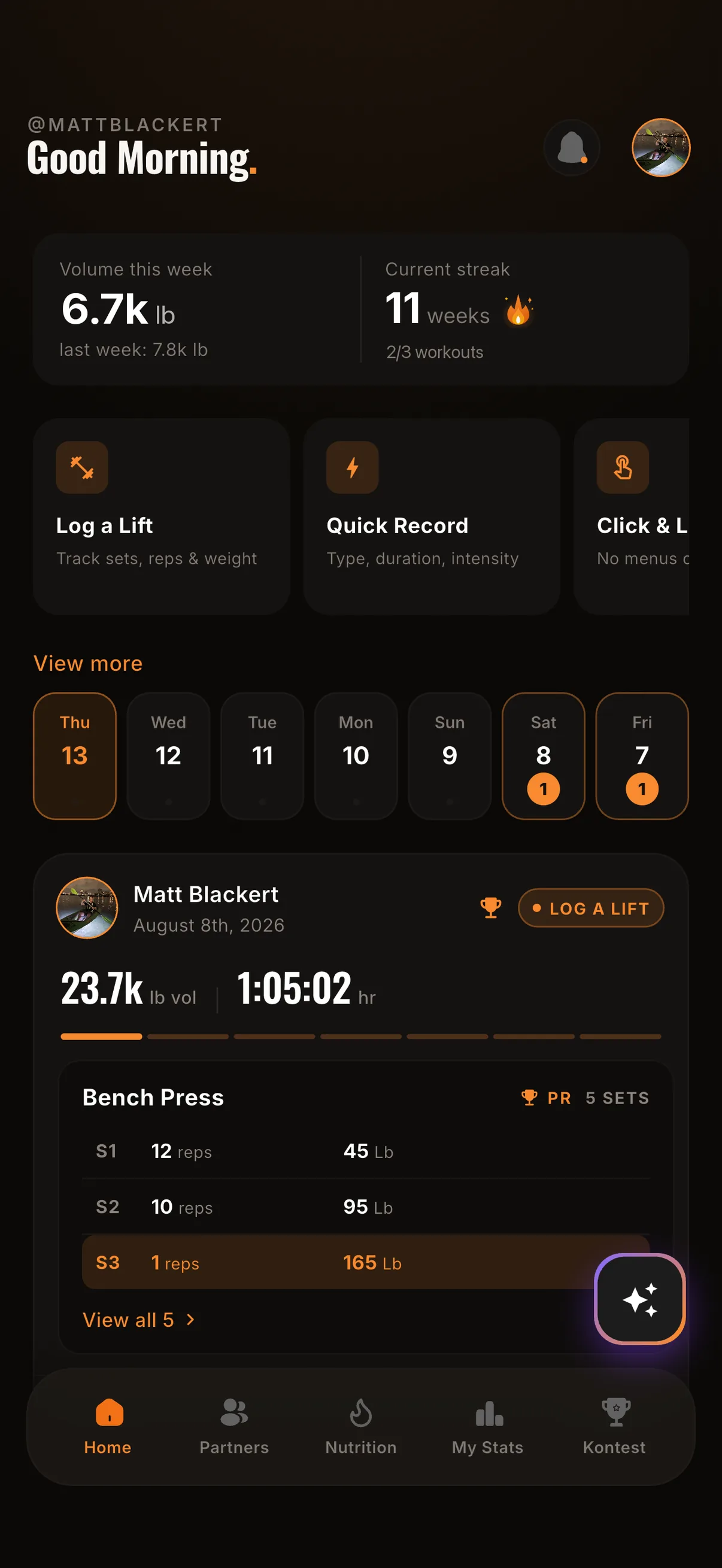
The easiest way to stop worrying about any of this meal to meal is to stop treating it as something you have to remember. Log the post workout meal in Kontest and let your protein total take care of itself: once it's part of the same daily log as your workout, you can see at a glance whether you actually hit your number today instead of guessing. Start logging your training and meals in Kontest and the whole post workout decision stops being something you have to think about every single time.
FAQ
What is the best post workout meal? One with 20 to 40 grams of protein and a source of carbs, eaten within a few hours of training. A chicken and rice bowl, a protein shake with fruit, or Greek yogurt with berries all qualify. There's no single best option, just a range of good ones that hit both macros.
Is it bad to not eat after working out? Not eating for an hour or two afterward isn't going to undo your session. What matters is your total protein and calories across the day. Going a full day without eating enough after consistently hard training is where it actually starts to cost you recovery and progress.
What should I eat after working out if I'm not hungry? Drink it instead of eating it. A protein shake, chocolate milk, or a smoothie is easier to get down than solid food when your appetite is shot, and it covers the same protein and carbs a meal would.
How soon do I need to eat after the gym? Within a few hours is plenty for almost everyone. If you trained fasted or it's been a long stretch since your last meal, aim for sooner rather than later, but there's no cliff at the 30 or 60 minute mark where your workout stops counting.
What is post workout nutrition actually supposed to do? Post workout nutrition supplies the protein your muscles use to repair and rebuild after training, and the carbs that refill the glycogen you burned, especially after a longer cardio session. It supports the results your training already set up, it doesn't replace consistent training or a solid daily total.
What to eat after a workout is simpler than the supplement aisle wants it to be: protein, some carbs, sometime in the next few hours, most days. Get that right consistently and the exact minute you eat stops mattering nearly as much as whatever convinced you to worry about it in the first place.