Should You Work Out When Sick? The Above the Neck Rule, Explained
Above the neck, train light. Below the neck, or running a fever, take the day off. That is the entire decision rule for whether you should work out when sick, and it holds up a lot better than the "listen to your body" shrug most articles hand you while you're standing in your kitchen deciding whether to pack a gym bag or go back to bed.
You don't need a medical degree to use this rule. You need to know where your symptoms are sitting.
The Short Answer: The Above the Neck Rule
Coaches and athletic trainers have leaned on some version of this check for years, because it's fast enough to apply half asleep and specific enough to actually be useful.
Above the neck: runny nose, sneezing, mild sore throat, nasal congestion, watery eyes. Training is fine. Cut the volume and intensity, but you can go.
Below the neck, or systemic: chest congestion, a cough that's bringing anything up, body aches, chills, an upset stomach, or a fever. Skip the session. Your body is running a bigger operation than usual, and a hard workout competes with it for resources instead of adding to it.
It's not a perfect line (a genuinely miserable head cold can be a good reason to rest too), but it beats guessing, and it gets you out of the two failure modes people usually fall into: training through something that needed rest, or skipping a session over a sniffle that needed nothing but a lower weight on the bar.
Symptom Check: Train, Modify, or Rest
Use this as your default. If something feels worse than the category suggests, trust that over the table.
| Symptom | Verdict | Why |
|---|---|---|
| Runny nose | Train | Above the neck, your immune system has this handled |
| Sneezing | Train | Above the neck |
| Nasal congestion | Train, maybe skip cardio-heavy work | Above the neck, but breathing is harder |
| Mild sore throat | Train, lighter | Above the neck; ease off max-effort sets |
| Mild headache | Modify | Could be dehydration, could be day one of something bigger; watch it |
| Dry cough, no congestion | Modify | Borderline; keep the session easy and short |
| Sore throat with swollen glands | Rest | Possible bigger infection brewing, let it settle first |
| Body aches, chills | Rest | Below the neck and systemic, your body is fighting something |
| Fever | Rest, and see a doctor if it's high or won't break | Below the neck; training adds load to a system already under strain |
| Chest congestion or a productive cough | Rest, see a doctor if it worsens | Below the neck, with real risk of pushing a chest infection further |
| Nausea, vomiting, diarrhea | Rest | Below the neck; dehydration risk makes exercise worse, not better |
| Fatigue way out of proportion to your other symptoms | Rest, and check with a doctor | Could be something bigger than a common cold |
None of this replaces an actual doctor. If you've got a fever that won't come down, chest tightness, or symptoms that are getting worse instead of better, that's a phone call to a doctor, not a decision you make with a workout table.
What Training Hard While Sick Actually Costs You
Here's the part that usually gets skipped: even when a workout is "allowed," pushing hard while sick is a bad trade.
Your coordination is off. Your grip is weaker. Your resting heart rate is already elevated before you've picked up a single dumbbell, so the same set that's usually an RPE 7 shows up feeling like a 9. You are not setting a PR like this. Best case, you grind through a worse version of your normal session. Worst case, you turn a three-day cold into a nine-day one because you never gave your body the resources to actually fight it off.
There's also a compounding cost nobody logs: a bad workout while sick often needs its own extra recovery day on top of the illness. You don't just lose the sick days, you lose the day after, spent recovering from training sick instead of recovering from being sick. Above-the-neck symptoms are the exception precisely because the trade is small: a lighter session costs you almost nothing and keeps the habit alive.
When to Come Back and How to Ramp Back Up
Come back when your symptoms have moved back above the neck, or cleared entirely, and you've had at least one full day of feeling normal, not just "better than yesterday."
Then don't walk back in at your old numbers. A few days off training, especially with a fever involved, is enough to knock strength and work capacity down slightly. Trying to hit last week's weights on day one back is how a cold turns into a tweaked lower back.
A simple ramp that works for most lifters:
- First session back: drop to roughly 60 to 70 percent of your usual working weight or volume. Same exercises, same structure, lighter load. This is a movement check, not a training stimulus.
- Second session: move up to 80 to 85 percent if the first one felt normal. Watch your heart rate and breathing more than your energy, since energy lies for a few extra days after you feel "fine."
- Third session: back to full weights and volume if everything, including sleep and appetite, has actually normalized.
If a session in that ramp feels harder than it should, that's information, not weakness. Drop back a step and add another easy day.
Gym Etiquette: When Staying Home Is the Right Call
Even when your own symptom check says "train," there's a second question: should anyone else be around you while you do it?
Cold and flu viruses are typically most contagious in the first few days of symptoms, which is usually the exact window you're deciding whether to go. If you're coughing, sneezing into the air instead of an elbow, or wiping your nose every few minutes, that's a home gym day (or a rest day), full stop, regardless of what the above-the-neck rule says about your own training. A shared barbell and a shared bench are not the place to find out whether your cold is contagious.
If you do train at the gym while mildly symptomatic, wipe down everything you touch, keep your distance in group classes, and skip the sauna or steam room. None of that is about being polite. It's about not being the reason three other people are texting their own gym partner about a scratchy throat next week.
Protecting Momentum Without Wrecking Recovery
The part almost nobody covers is the psychological one: how do you take a smart rest day without it feeling like the whole thing fell apart?
The honest answer is that a rest day for a cold is not a broken streak, it's the plan working correctly. The lifters who stay consistent for years are not the ones who never miss a day, they're the ones who don't turn one missed day into a lost month because they felt like they'd already failed. That's the same wall that kills most workout accountability systems: not the missed session itself, but the spiral after it.
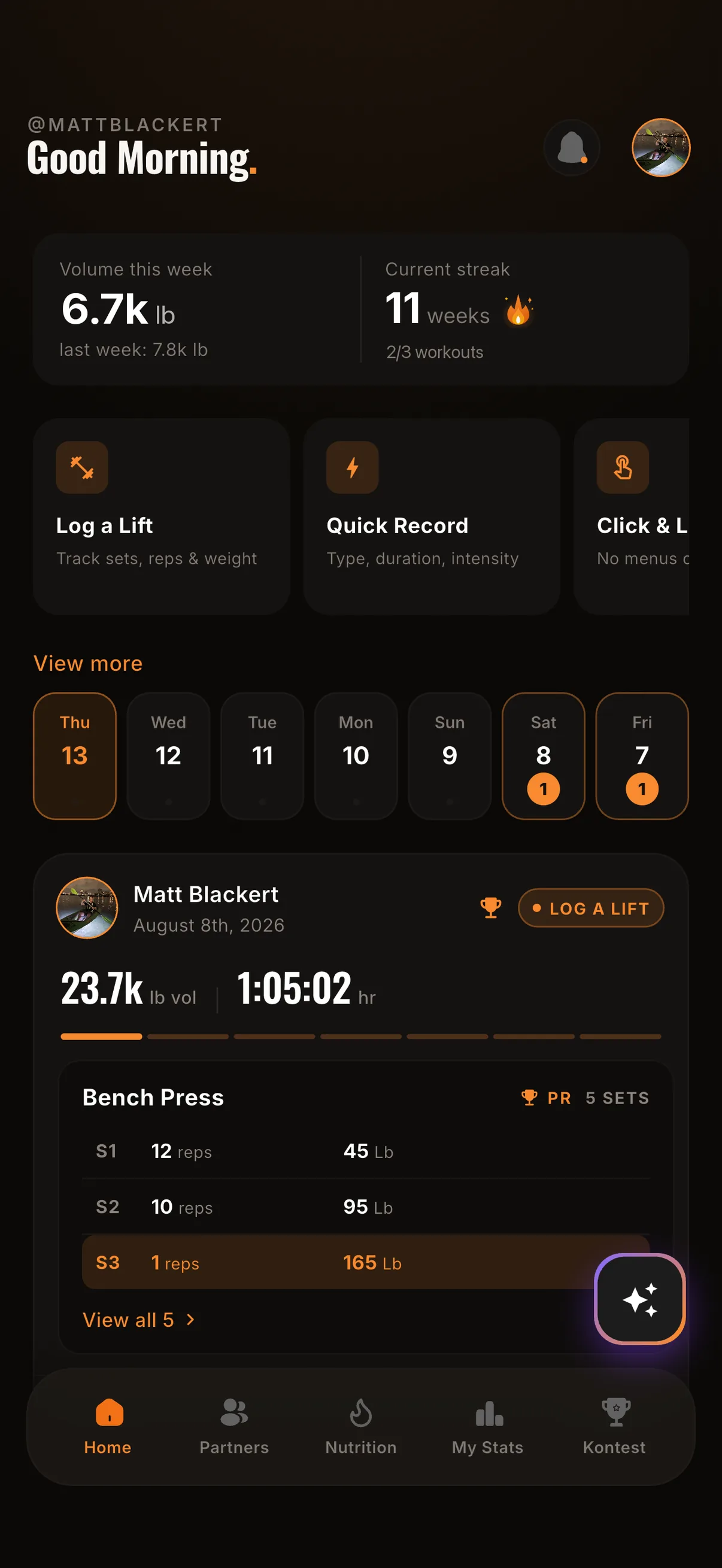
This is also exactly why Kontest runs on positive-only XP. The app never punishes a rest day, because punishing rest is how people talk themselves into training through a fever just to protect a number on a screen. Log the day as a rest day, note the reason if you want to, and let your streak account for it instead of resetting your motivation to zero. If you're already running a structured plan like the 30 day workout plan, the built-in catch-up day exists for exactly this: shift the week instead of scrapping it.
Rest smart, log the comeback in Kontest, and let the leaderboard wait for you. It will still be there when you're actually well, and so will your training partner, since the whole point of a kontest is that your friends can see you're back before you have to say a word about it. If you're not already tracking workouts this way, Kontest is free to join in beta.
FAQ
Can you work out with a cold? Usually, yes, if your symptoms are above the neck: runny nose, sneezing, mild congestion, a scratchy throat. Train, but lighter than usual. If symptoms move below the neck (chest, gut, body aches) or you develop a fever, rest instead.
Should I go to the gym with a cold? If you're contagious, meaning you're actively coughing or sneezing, consider training at home instead, even if your symptom check says exercise is fine for you. Your workout can wait a day; your gym neighbors would rather you did.
Is it OK to exercise with a sore throat? A mild sore throat on its own is usually fine for light training. A sore throat paired with swollen glands, fever, or body aches is a different situation and points toward rest.
Will working out while sick make it worse? It can, especially with below-the-neck or systemic symptoms. Training pulls resources your immune system needs elsewhere and can extend how long you're sick, on top of giving you a worse workout than usual.
How many days should I rest before going back to the gym? There's no fixed number. Rest until your symptoms are back above the neck (or gone) and you've had one full day of feeling genuinely normal, then ramp back in over two to three sessions instead of jumping straight to your old weights.